
Examining the Claim with Historical Facts
A common argument today is that the Bible was written by those who won wars, and that alternative voices were suppressed or removed.
It’s an appealing idea — especially in a world where we know history is sometimes shaped by power.
But when we examine the actual historical evidence, the argument begins to fall apart.
Let’s walk through the facts.
The First Problem: Early Christians Were Not the "Winners"
If the Bible were written by victors, we would expect:
- Political power
- Military dominance
- Cultural control
But the opposite was true.
The New Testament was written between 50-100 AD, when Christians were:
- A small minority
- Socially marginalized
- Often persecuted
- Without military power
For example:
- Paul the Apostle wrote many letters while imprisoned
- Christians were persecuted under Nero
- Early believers were sometimes executed simply for refusing to worship Caesar
This raises an obvious question:
How could persecuted minorities write history as “winners”?
They weren’t controlling governments - they were trying to survive.
The Old Testament Was Written Long Before Christianity
Another issue with the "winners wrote it" claim is the Old Testament.
The Hebrew Scriptures existed centuries before Christianity.
A major discovery confirmed this:
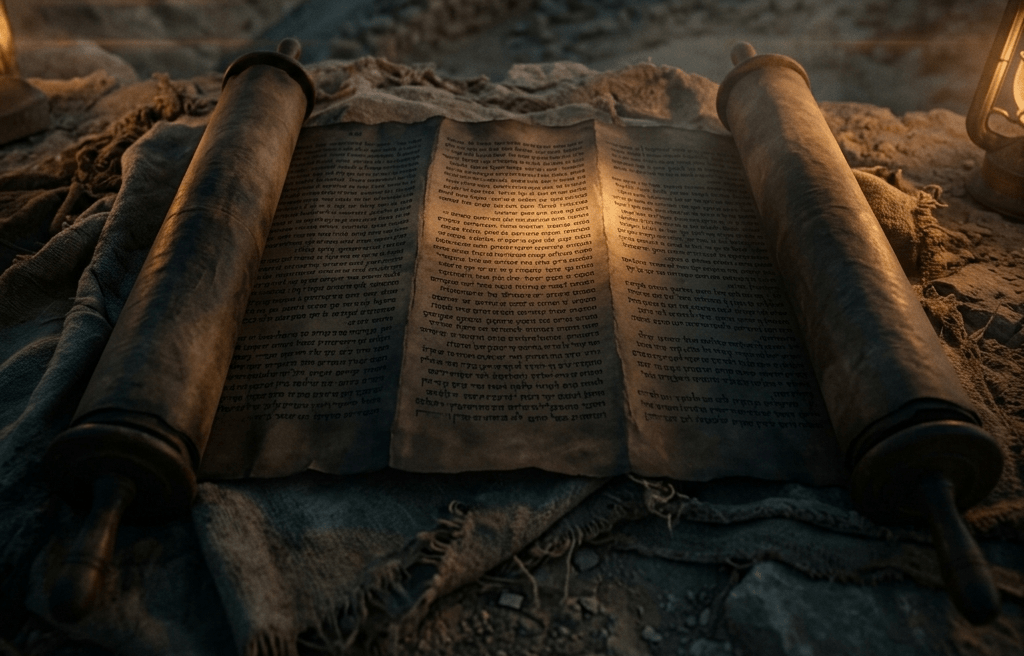
The Dead Sea Scrolls discovery
Found in 1947, these scrolls include:
- Isaiah
- Psalms
- Deuteronomy
- Many other Old Testament books
These manuscripts date back to 200 BC or earlier.
What’s remarkable is that they closely match modern Bibles.
This means:
- The Old Testament wasn’t rewritten later
- It wasn’t created by Christian political power
- It existed independently long before Christianity
This directly challenges the "winners wrote it" narrative.
The New Testament Has Exceptional Manuscript Evidence
When historians evaluate ancient documents, they look at:
- Number of manuscripts
- How early copies appear
- Agreement between copies
The New Testament performs unusually well.
For comparison:
- Homer - earliest copies appear about 500 years later
- Plato - about 1,200 years later
- New Testament - copies within 50–150 years
This makes the New Testament one of the best-preserved ancient texts in history.
If powerful groups rewrote the Bible later, we would expect:
- Major textual changes
- Late manuscript evidence
- Centralized editing
But instead, we find early, widespread copies from different regions.
That suggests preservation — not manipulation.
Non-Christian Sources Confirm Early Christianity
Even outside the Bible, early historians mention Jesus and Christians.
For example:
Tacitus
A Roman historian who wrote that:
- Jesus was executed
- Under Pontius Pilate
- Christians spread rapidly afterward
Josephus
Mentions:
- Jesus
- James (Jesus’ brother)
- Early Christian movement
Pliny the Younger
Describes Christians:
- Singing to Christ as God
- Refusing emperor worship
- Being persecuted
These independent sources confirm Christianity was not invented later by political winners.
What About Books That Were Left Out?
Some argue that alternative Christian texts were suppressed.
Yes - there were other writings, including:
- Gospel of Thomas
- Gospel of Judas
- Gospel of Mary
But these texts:
- Were written later (2nd-3rd century)
- Lack apostolic connection
- Contain very different theology
Many of these writings come from Gnosticism, which taught:
- The physical world is evil
- Salvation comes through secret knowledge
- Jesus only appeared human
These ideas differ significantly from the earliest Christian writings.
Meanwhile, the four canonical Gospels:
- Gospel of Matthew
- Gospel of Mark
- Gospel of Luke
- Gospel of John
were widely accepted early and across multiple regions.
This suggests organic recognition — not political selection.
The Council of Nicaea Did Not Choose the Bible
A popular claim is that the Bible was chosen at the
Council of Nicaea.
But historically:
- Nicaea focused on the nature of Christ
- It did not finalize the biblical canon
- Most New Testament books were already widely accepted
For example:
Irenaeus
(around 180 AD) already affirmed four Gospels - 150 years before Nicaea.
This again suggests gradual recognition rather than political control.
The Bible Includes Weaknesses — Not Propaganda
If the Bible were written by "winners," we might expect:
- Heroic leaders
- Perfect followers
- Political messaging
Instead, the Bible includes:
- Disciples misunderstanding Jesus
- Peter the Apostle denying Jesus
- Leaders arguing and failing
- Women as first witnesses to the resurrection (unusual in ancient culture)
These details are not typical propaganda.
They look more like honest historical memory.
So Was the Bible Written by the Winners?
The historical evidence suggests:
No.
Instead, the Bible appears to be:
- Written by multiple authors
- Preserved by independent communities
- Supported by early manuscripts
- Confirmed by non-Christian historians
- Recognized gradually over time
Ironically, early Christianity spread not through military victory, but through:
- Persecution
- Suffering
- Martyrdom
In that sense, Christianity is unusual in history.
Its early "winners" weren’t generals - they were witnesses.
And that makes the claim that "the Bible was written by those who won wars" historically difficult to sustain.
If anything, the stronger historical question becomes:
Why did a persecuted minority's writings survive and spread so widely?
That’s a far more interesting question — and one historians are still exploring today.